Know your password before someone else does.
Check strength, estimate crack time, and see if it's already been exposed in a known breach — instantly, in your browser.
Editor's Pick
Best Password Managers of 2026
We tested encryption standards, breach monitoring, and cross-device syncing across the top password managers to find which ones are actually worth trusting with your logins.
Daily Security Briefing
A new short read every day — breaking vulnerabilities, scam alerts, and quick security tips. Bookmark this page and check back daily.
What Is Cybersecurity? A Complete Beginner's Guide
Learn cybersecurity from the ground up — CIA Triad, Red vs Blue Teams, security domains, common threats, and a practical learning path for beginners.
What Is Offensive Security? A Complete Beginner's Guide
Learn penetration testing, red teaming, vulnerability assessment, social engineering, offensive security tools, methodologies, and ethics.
What Is Defensive Security? A Complete Beginner's Guide
Learn blue teaming, prevention, detection, response, SIEM, firewalls, patch management, and a practical learning roadmap.
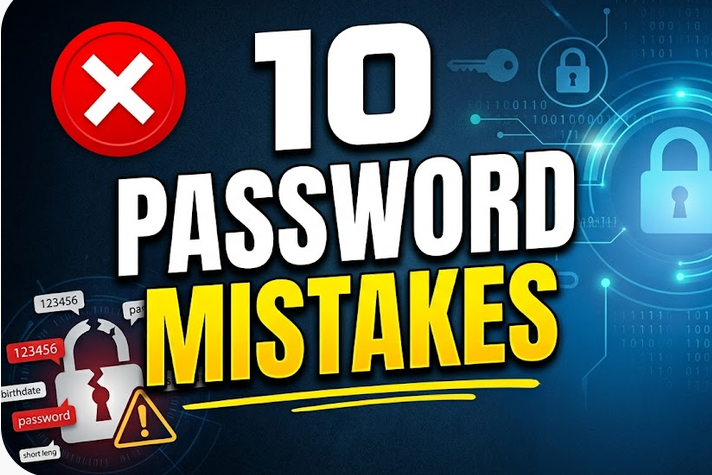
10 Common Password Mistakes You're Probably Making
Reusing passwords? Using personal info? Here are the 10 most common password mistakes and exactly how to fix each one.
How to create a strong password
12+ Characters
Longer passwords dramatically increase security.
Mix Cases
Use both uppercase and lowercase letters.
Numbers & Symbols
Add numbers and special characters.
Avoid Common Words
Never use simple words like password123.
More tools
Common password attacks
Passwords protect our most important online accounts, including email, banking, and social media. Cyber criminals constantly develop new techniques to steal or guess them — here's how the most common ones work.
Brute Force Attack
A brute force attack is one of the simplest and most common methods used by hackers to crack passwords. Automated software repeatedly guesses different password combinations until the correct one is found — modern computers can attempt billions of guesses per second, making short or simple passwords very easy to break.
Passwords like 123456, password, qwerty, or abc123 can often be cracked within seconds. The time required depends mainly on length and complexity: a short password with only letters can be cracked very quickly, while a long password mixing uppercase, lowercase, numbers, and symbols can take years or centuries.
To protect yourself, use passwords at least 12–16 characters long with a mix of letters, numbers, and special characters, and enable two-factor authentication (2FA) wherever possible.
Dictionary Attack
A dictionary attack tries a large list of commonly used passwords and words instead of every possible combination — these lists often come from dictionaries, leaked password databases, and collections of frequently used passwords.
Passwords such as welcome123, football, qwerty, iloveyou, and password123 are commonly found in these lists. Attackers may also try slight variations, like adding numbers or symbols to common words.
Avoid common words or simple phrases. Combine unrelated words with symbols, or use a password generator or password manager, to create something genuinely difficult to guess.
Phishing Attack
Rather than guessing a password with software, attackers manipulate people into giving it away. A fake email or message, made to look like it's from a trusted organization, asks the user to "verify their account" or reset their password via a link — leading to a fake page that captures whatever is entered.
Phishing is effective because it targets human behavior, not technical weaknesses — even experienced users can fall for a well-designed message.
Always check the website address before entering login details, avoid clicking suspicious links, and enable 2FA so a stolen password alone isn't enough.
Credential Stuffing
Credential stuffing reuses usernames and passwords stolen from one data breach to try logging into other, unrelated sites — it works because so many people reuse the same password across multiple accounts.
If a shopping site and a social media account share the same login, a breach at one exposes the other. Automated tools can test thousands of these combinations within seconds.
Use a different password for every account — a password manager makes this practical — and check periodically whether your credentials have appeared in a known breach.
Latest reviews
Hands-on testing across password managers, VPNs, antivirus software, and browsers.

Explore Cybersecurity Tools
Hands-on guides for the tools security professionals actually use — network analysis, password auditing, and penetration testing.
Wireshark
Capture and inspect live network traffic packet by packet.
Read guide →
Nmap
Scan networks to discover hosts, open ports, and services.
Read guide →
Hydra
A fast, parallelized login/credential brute-forcing tool.
Read guide →
Metasploit
Framework for developing and running exploit code safely.
Read guide →Notable data breaches in history
Yahoo
All 3 billion Yahoo accounts were affected, making it the largest single-company breach on record.
National Public Data
A misconfigured database exposed roughly 2.9 billion records, including names, addresses, and Social Security numbers.
Data scraped from around 700 million profiles was later found for sale, including contact and professional details.
FriendFinder Networks
Roughly 412 million accounts were exposed, including poorly protected passwords spanning two decades of user data.
Equifax
About 147 million people had sensitive financial and identity data exposed, including Social Security numbers.
Anthem
Around 80 million healthcare records were breached, remaining one of the largest healthcare data incidents to date.
Publicly reported figures from major, well-documented breaches — shown for context, not live or real-time data.
Email security & data breach guide
Your email address is one of the most important parts of your online identity. If it's exposed in a data breach, hackers can use it to access your accounts, send phishing emails, or attempt password attacks.
What is an email data breach?
An email data breach occurs when hackers gain unauthorized access to a database containing user information such as email addresses, passwords, and personal details — often when a website is hacked or a company fails to secure its systems properly. Once stolen, this data is frequently sold or shared on underground forums.
Why you should check your email
Checking your email against breach databases helps you identify whether your information has been exposed in past security incidents. If it has, attackers may attempt to access your accounts using stolen credentials or techniques like credential stuffing.
What to do if your email is compromised
Act immediately: change your passwords, especially for important accounts like banking, email, and social media, and always use strong, unique passwords for each. Enabling two-factor authentication (2FA) significantly reduces the risk of unauthorized access even if a password leaks.
How to protect your email from hackers
Avoid using the same password across multiple websites and be cautious of phishing emails that try to trick you into revealing login details. Regularly updating your passwords and using a password manager greatly improves your overall security.
How to create a strong and secure password
A weak password can be cracked within seconds. A strong one can take years or even centuries.
Use long passwords
Length is one of the most important factors in password security — at least 12 to 16 characters is significantly harder to crack than shorter ones, since automated tools can test millions of combinations per second.
Combine different character types
A strong password mixes uppercase letters, lowercase letters, numbers, and special symbols — making it much harder for attackers to guess than a simple word.
Avoid common words and patterns
Passwords like "password123", "qwerty", or "welcome" are extremely easy to crack because dictionary attacks rely specifically on lists of frequently used passwords.
Do not reuse passwords
Using the same password across multiple sites means one breach compromises them all. Always use a unique password for each account to limit the impact of any single breach.
Use passphrases instead of words
A passphrase — a combination of random words like "BlueTiger$Mountain92" — is easier to remember but still very secure, and much harder for brute force attacks to crack than a short, complex password.
Enable two-factor authentication (2FA)
Even a strong password can be compromised. 2FA adds a second verification step, ensuring that a stolen password alone still isn't enough to access your account.
Frequently asked questions
Is it safe to check my password on this site?
Yes. Your password is never sent anywhere in plain text — this tool checks strength locally in your browser and only sends a partial, irreversible hash to check against known breach databases, using the same k-anonymity method as Have I Been Pwned.
How often should I change my passwords?
You don't need to change strong, unique passwords on a fixed schedule. Change a password immediately if the account is reported in a breach, and use a password manager so every account has its own password to begin with.
What makes a password "strong"?
Length matters more than complexity — 16+ random characters or a long passphrase is much harder to crack than a short password stuffed with symbols. Uniqueness across accounts matters just as much as strength.
Do I really need a password manager?
If you have more than a handful of online accounts, yes. Reusing passwords is one of the most common ways accounts get compromised, and a password manager is the only practical way to keep a unique password for every site.
Is a VPN the same thing as antivirus software?
No. A VPN encrypts your internet connection and hides your IP address, mainly protecting your privacy on the network. Antivirus software scans your device for malware. Most people benefit from having both.